Explore Lahaul and Spiti
The Heart of Lahaul and Spiti
Lahaul Spiti District
Lahaul Spiti is a high-altitude tribal district in Himachal Pradesh, known for its dramatic Himalayan landscapes, Buddhist monasteries, remote mountain villages and unique local culture. The district combines the two distinct regions of Lahaul and Spiti, each offering a different landscape and travel experience.
Keylong is the administrative headquarters of Lahaul Spiti, while Kaza serves as the sub-divisional headquarters of Spiti. From the green valleys and rivers of Lahaul to the rugged cold-desert landscapes of Spiti, the district offers some of the most distinctive travel experiences in Himachal Pradesh.
Popular places and attractions include Keylong, Kaza, Chandratal, Kunzum Pass, Baralacha La, Tabo, Dhankar, Key Monastery, Kibber, Pin Valley and Trilokinath. The region is especially known for its Buddhist heritage, high mountain passes, scenic valleys and adventure-oriented road journeys.
Lahaul Spiti is a high-altitude district in Himachal Pradesh that combines two distinct Himalayan regions—Lahaul and Spiti. Located in the trans-Himalayan landscape, the district is known for its remote villages, high mountain passes, Buddhist monasteries, dramatic valleys, rivers and cold-desert scenery.
The present Lahaul and Spiti district was formed in 1960 by bringing the former Lahaul and Spiti areas together. Keylong is the administrative headquarters of the district, while Kaza is the sub-divisional headquarters of Spiti.
Lahaul and Spiti – Two Different Himalayan Landscapes
Although Lahaul and Spiti form one district, the two regions have noticeably different landscapes.
Lahaul is comparatively greener and is shaped by the Chandra and Bhaga rivers, high mountains, glaciers and valleys. Keylong is its main administrative and travel centre. The confluence of the Chandra and Bhaga rivers at Tandi forms the Chandrabhaga, which is known downstream as the Chenab.
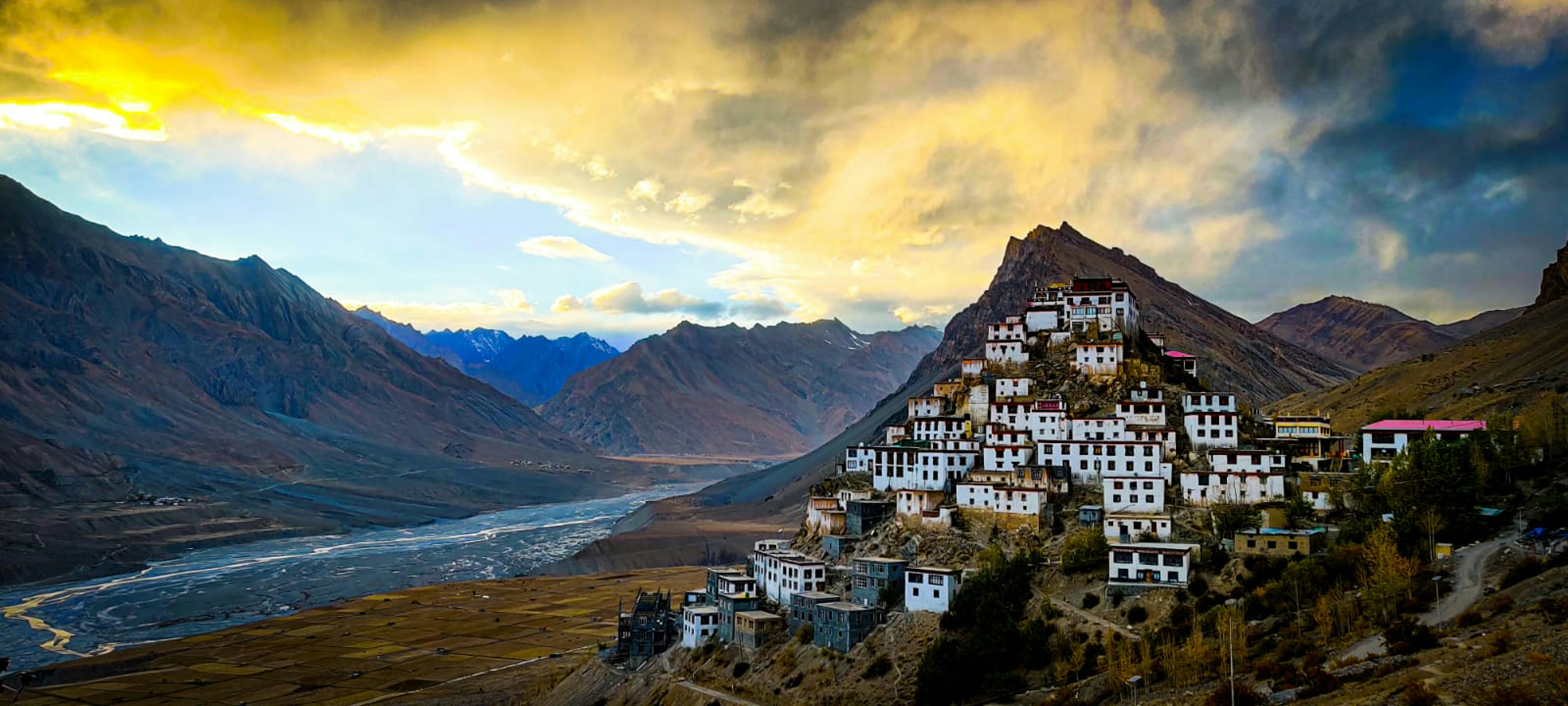
Spiti, meaning the “middle land”, is characterised by rugged mountains, dry valleys, high-altitude villages and a cold-desert environment. Its landscape and culture are strongly influenced by Tibetan Buddhism, with monasteries, chortens and prayer flags forming an important part of the region.
Geography of Lahaul Spiti
Lahaul Spiti covers around 13,833 square kilometres, making it one of the largest districts of Himachal Pradesh by area. The district has a predominantly high-altitude mountain environment, with major rivers including the Chandra and Bhaga.
The geography changes significantly across the district. Lahaul contains greener valleys and river systems, while Spiti is widely recognised for its dry, rugged and cold-desert terrain.
This geographical diversity is one of the major reasons Lahaul Spiti attracts travellers, trekkers, photographers and adventure enthusiasts.
Places to Visit in Lahaul Spiti
Lahaul Spiti has a wide range of natural, cultural and religious attractions.
Keylong: The administrative headquarters of the district and an important base for exploring Lahaul. The town lies along the Manali–Leh route and provides access to several nearby monasteries and villages.
Kaza: The main settlement and administrative centre of Spiti, Kaza is a base for exploring destinations such as Key Monastery, Kibber, Langza, Hikkim and Komic.
Chandratal: Also known as the Lake of the Moon, Chandratal is a scenic high-altitude lake associated with the Lahaul-Spiti region and is a popular stop on the Manali–Kaza route.
Kunzum Pass: One of the important high mountain passes connecting Lahaul with Spiti. The official district website places Kunzum Pass at an altitude of about 4,551 metres.
Baralacha La: A major high-altitude pass on the Manali–Leh route, associated with the headwaters of the Chandra and Bhaga river systems.
Key Monastery: One of the best-known Buddhist monasteries in Spiti, located near Kaza and surrounded by the characteristic high-altitude landscape of the valley.
Tabo: A historic settlement in Spiti known for Tabo Monastery and its longstanding Buddhist heritage.
Dhankar: A dramatic mountain settlement and former administrative centre of Spiti, known for its monastery and spectacular location above the Spiti River.
Trilokinath: A significant religious destination in Lahaul where Hindu and Buddhist traditions have coexisted for centuries.
Pin Valley: A high-altitude valley and national park landscape known for its unique flora and fauna, including species such as Himalayan ibex, blue sheep and snow leopard.
Buddhist Culture and Heritage
Buddhism has a deep cultural influence across Lahaul and Spiti. The region is home to numerous monasteries containing traditional Buddhist art, murals, thangkas, sculptures and religious manuscripts.
Important monastic centres include Key Monastery, Tabo Monastery, Dhankar, Shashur and Kungri. These sites are not only tourist attractions but also important parts of the region's living religious and cultural heritage.
Best Time to Visit Lahaul Spiti
The best time to visit depends on which part of the district you plan to explore and the road conditions.
Summer and the warmer months are generally the main travel season because heavy snowfall can affect road connectivity during winter. Himachal Tourism notes that Lahaul's road connectivity can be affected by snow for several months, while Spiti is generally approached through seasonal road routes from Manali or Shimla-Kinnaur.
Travellers should always check current road conditions and official travel advisories before starting a journey because weather and high-altitude conditions can change quickly.
How to Reach Lahaul Spiti
Road travel is the primary way to explore Lahaul Spiti.
Lahaul can be accessed from the Manali side, while Spiti can be approached through routes connecting Shimla and Kinnaur or from Manali when the relevant high-altitude route is open. Keylong is an important base for Lahaul, while Kaza is the main base for exploring Spiti.
Because the region includes high mountain passes and roads affected by snowfall, travellers should plan their route according to the current season and road status.
Things to Do in Lahaul Spiti
Lahaul Spiti offers experiences beyond conventional sightseeing. Popular activities include:
-
Exploring Buddhist monasteries
-
Visiting high-altitude villages
-
Road trips through Himalayan mountain passes
-
Trekking and hiking
-
Photography and landscape exploration
-
Visiting high-altitude lakes
-
Exploring local culture and traditional villages
-
Wildlife spotting in suitable areas such as Pin Valley
The region is particularly attractive to travellers looking for remote Himalayan landscapes and culturally rich destinations.
Lahaul Spiti Weather
Lahaul Spiti experiences a cold and dry high-altitude climate, with significant variation between seasons. Summers are generally cool and suitable for sightseeing and road trips, while winters bring heavy snowfall and extremely cold conditions, particularly in higher areas. Weather can change quickly in the mountains, so travellers should check the latest weather and road conditions before visiting Lahaul Spiti.
Why Visit Lahaul Spiti?
Lahaul Spiti stands apart from many other destinations in Himachal Pradesh because of the contrast between its two regions. Lahaul offers greener valleys, rivers and mountain settlements, while Spiti presents a stark cold-desert landscape with ancient monasteries and remote villages.
This combination of natural scenery, Buddhist heritage, high-altitude routes and traditional Himalayan culture makes Lahaul Spiti one of the most distinctive destinations to explore in Himachal Pradesh.
For travellers planning a trip, it is useful to treat Lahaul and Spiti as two connected but different experiences rather than covering the entire district as a single landscape.
FAQs
Common questions about Lahaul and Spiti
Lahaul Spiti is famous for its dramatic Himalayan landscapes, high-altitude villages, Buddhist monasteries, mountain passes, remote valleys and cold-desert scenery. Popular attractions include Keylong, Kaza, Chandratal, Key Monastery, Tabo, Dhankar and Pin Valley.
Some of the best places to visit in Lahaul Spiti include Kaza, Keylong, Chandratal Lake, Kunzum Pass, Key Monastery, Tabo Monastery, Dhankar, Kibber, Langza, Komic, Hikkim, Pin Valley and Trilokinath.
The best time to visit Lahaul Spiti generally depends on the route and current road conditions. The warmer months are the main travel season, while heavy snowfall can affect connectivity during winter. Always check current weather and road conditions before travelling.
Lahaul Spiti can primarily be explored by road. Lahaul can be accessed from the Manali side, while Spiti can be reached through routes from Shimla–Kinnaur or Manali when the relevant high-altitude routes are open.
No. Spiti Valley is one part of Lahaul Spiti district, while Lahaul is a separate region of the same district. The two regions have different landscapes, settlements and travel experiences.
Lahaul and Spiti offer different experiences. Lahaul is known for greener valleys, rivers, mountain landscapes and places such as Keylong and Trilokinath, while Spiti is known for its cold-desert landscape, Buddhist monasteries and high-altitude villages around Kaza.
Travel access to different parts of Lahaul Spiti varies by season. Snowfall can temporarily affect high-altitude roads and mountain passes, so travellers should check the latest road status and local travel advisories before planning a trip.
A trip of around 7–10 days can provide a reasonable introduction to major destinations in Lahaul and Spiti, although the ideal duration depends on the route, starting point and number of places you want to explore.